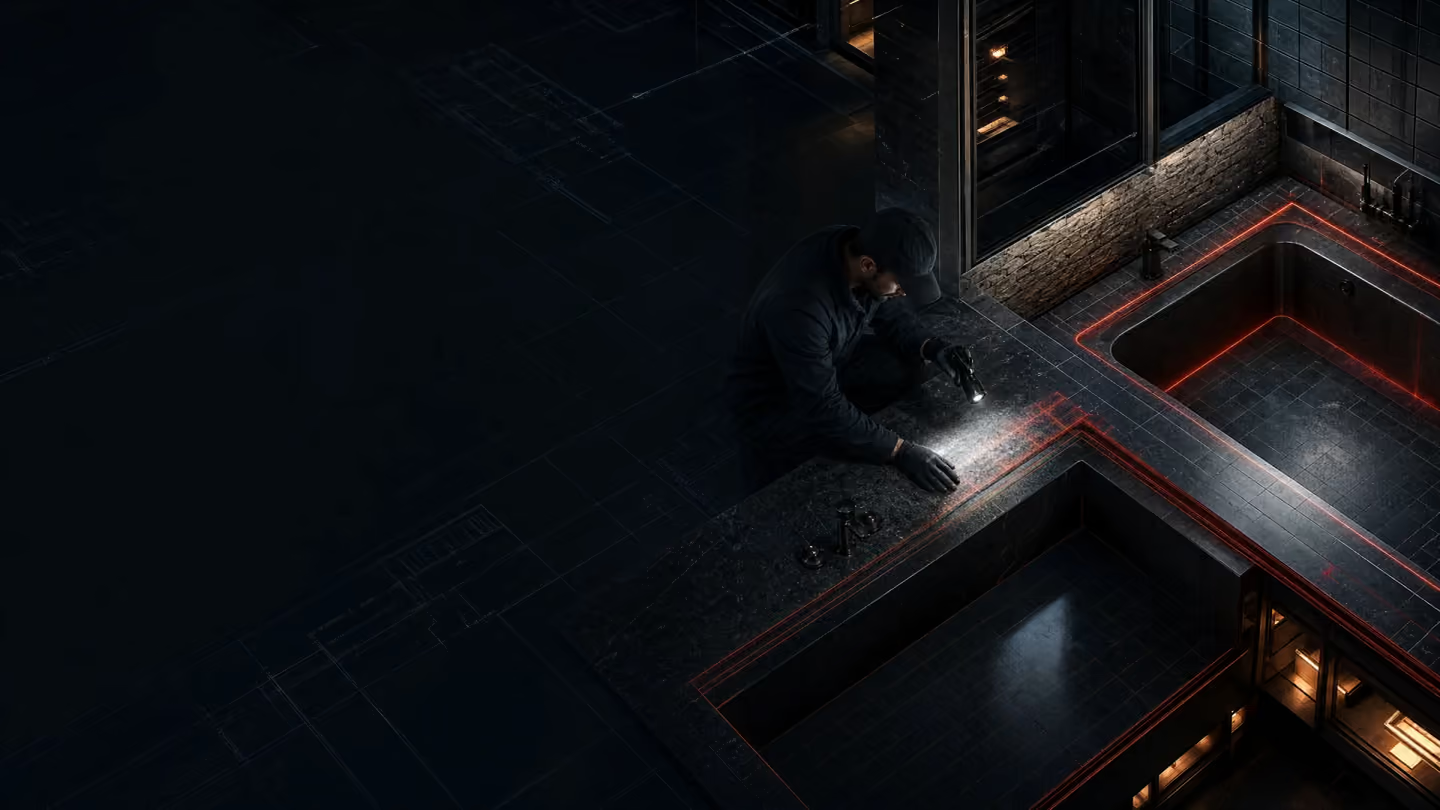
A refinished stone countertop and tiled bath surface under precise inspection lighting

Resurfacing & Refinishing

When surfaces wear down, we restore

Countertop, tub, shower, enclosure, and fireplace refinishing that revitalizes existing surfaces, improves durability, and extends their lifespan.

  • Veteran-owned
  • Five-state service
  • Free inspection

Resurfacing & Refinishing, clearly scoped.

When surfaces show wear, CMAC restores. Refinishing is a cost-effective solution that revitalizes your existing surfaces — enhancing durability, improving appearance, and extending their lifespan. The work covers kitchen countertop refinishing, bathroom countertop resurfacing, tub and shower refinishing, enclosure refinishing, fireplace and hearth refinishing, surface strip and preparation, and protective clear coat finishes.

The case for refinishing is simple. Replacing a tub means removing tile, disturbing plumbing, and often opening a wall. Replacing a countertop means pulling the sink and faucet, sometimes the backsplash, and living without a kitchen while it happens. Refinishing addresses the surface in place, which generally makes it faster and far less disruptive than replacement.

01SCOPE MODULE

Why this fits multifamily unit turns

On an apartment or student housing turn, the constraint is days, not dollars alone. A unit that cannot be leased is a unit producing nothing, and replacement work in an occupied building means demolition noise, hallway traffic, dumpsters, and elevator time.

Refinishing changes that calculation. A tub, a vanity top, and a surround can be brought back to a clean, uniform finish without opening walls or hauling out debris, and finishes can be standardized across a property so units match regardless of when each one was built or last updated. For property managers running dozens of turns a year, consistency is worth as much as speed.

02SCOPE MODULE

Preparation is the entire job

A refinished surface fails for one reason: the new coating did not bond to the old one. Everything about longevity is decided before any finish is applied.

  • Cleaning and degreasing — soap scum, body oils, cleaning product residue, and silicone from old caulk all prevent adhesion and all have to come off first.
  • Etching or abrasion — a glossy surface is profiled so the coating has mechanical grip rather than sitting on polished glaze.
  • Repairs — chips, cracks, and gouges are filled and sanded flush, because a coating follows the shape underneath it and hides nothing.
  • Caulk removal — old caulk is cut out entirely; coating over silicone guarantees a failure line at the joint.
  • Masking and ventilation — surrounding surfaces, fixtures, and floors are protected, and the space is ventilated throughout the work.
  • Primer and topcoat — a bonding primer suited to the substrate, followed by the finish coat and a protective clear coat.
03SCOPE MODULE

Cure time is not dry time

A refinished tub can feel dry to the touch long before the coating has reached its working hardness. Putting it back into service early is the most common way a good refinish gets ruined, because the finish is still soft enough to imprint, scratch, or lift at the drain.

Cure schedules vary by product, temperature, and humidity, so the specific return-to-service time comes with your job rather than from a general figure. Expect to keep the surface dry and unused for the stated period, to leave any drain hardware and caulk work until it is complete, and to hold off on bath mats with suction cups, which are hard on any refinished tub even long after cure.

04SCOPE MODULE

What can and cannot be refinished

Refinishing works on porcelain and enameled steel or cast iron tubs, fiberglass and acrylic tubs and surrounds, ceramic tile walls and countertops, cultured marble, laminate countertops, solid surface material, and masonry fireplace surrounds and hearths. On most of these the surface is sound and only the finish has failed, which is exactly the situation refinishing exists for.

It is the wrong answer in a few cases. A tub with structural cracks, soft spots underfoot, or rust perforation through the shell needs replacement — a coating does not restore structure. Surfaces with active water intrusion behind them have a leak problem that has to be fixed first. Natural stone that has been sealed and honed is normally restored by polishing and resealing rather than coating. And a surface that has already been refinished several times may need the previous coatings fully stripped before anything new will bond.

Resurfacing and refinishing are available for homes, commercial buildings, and multifamily properties across Texas, Oklahoma, Arkansas, Tennessee, and Georgia. Call 1-888-389-CMAC.

What resurfacing & refinishing includes

Kitchen countertops

Worn laminate, tile, and solid surface countertops refinished in place.

Bathroom countertops and vanities

Cultured marble and tile vanity tops resurfaced to a uniform finish.

Tubs and showers

Porcelain, cast iron, fiberglass, and acrylic tubs and pans refinished without removal.

Enclosures and surrounds

Tile and one-piece surrounds restored along with the tub for a consistent result.

Fireplace and hearth

Masonry surrounds and hearths refinished to update a dated focal point.

Strip, prep, and clear coat

Full surface preparation and a protective clear coat, which is what makes it last.

The CMAC process for resurfacing & refinishing

  1. 1

    Schedule

    Tell us what is happening at your property.

  2. 2

    Inspect

    We document the property and affected systems carefully.

  3. 3

    Plan

    Review a clear scope and written proposal.

  4. 4

    Build

    The CMAC team completes the approved work.

  5. 5

    Confirm

    A final walkthrough closes out the project.

Resurfacing & Refinishing questions

How quickly do I need to act on water damage?

Immediately. The first 24 to 48 hours determine whether you are drying a building or rebuilding one. Mold can begin colonizing wet organic material within roughly a day or two under the right conditions, and saturated drywall, insulation, and subfloor lose salvageability fast. CMAC offers 24/7 emergency response for water mitigation.

Does CMAC offer emergency service?

Yes, for the situations that genuinely cannot wait: 24/7 emergency response for water mitigation, and 24/7 emergency garage door repair. Storm response work is dispatched as fast as conditions and crew availability allow after an event.

What kind of company is CMAC?

CMAC Roofing and Sheet Metal LLC is a veteran-owned and operated construction and remodeling company founded by Christian Viveiros. We handle roofing, gutters, garage doors, restoration, and exterior work for residential, commercial, and multi-family properties. We are a GAF Master Elite® certified contractor and a GAF President’s Club award winner.

What states does CMAC serve?

Five: Texas, Oklahoma, Arkansas, Tennessee, and Georgia. CMAC publishes office addresses and local contact information for Dallas–Fort Worth (Haslet), Houston (Rosenberg), Austin (Georgetown), Oklahoma City, and Nashville. Arkansas and Georgia inquiries route through the regional line; no walk-in office is published in either state.

What are CMAC’s core principles?

Earn the customer’s trust, use only quality materials, and deliver exceptional workmanship. The company operates under the motto “Integrity Truly Matters,” and the practical version of that is simple: document what we find honestly, quote what the job actually requires, and stand behind the work after the crew leaves.

What does GAF Master Elite® mean?

GAF awards Master Elite® status to a small fraction of roofing contractors in North America. It requires proof of proper licensing, adequate insurance, and a sustained record of quality installations and customer satisfaction. Practically, it means CMAC can offer enhanced GAF system warranties that non-certified contractors cannot, and that GAF has independently vetted the company. CMAC is also a GAF President’s Club award winner.

Start with a free inspection.

Tell CMAC what is happening at the property. We will inspect the condition and put the recommended scope in writing.