 ROOFING
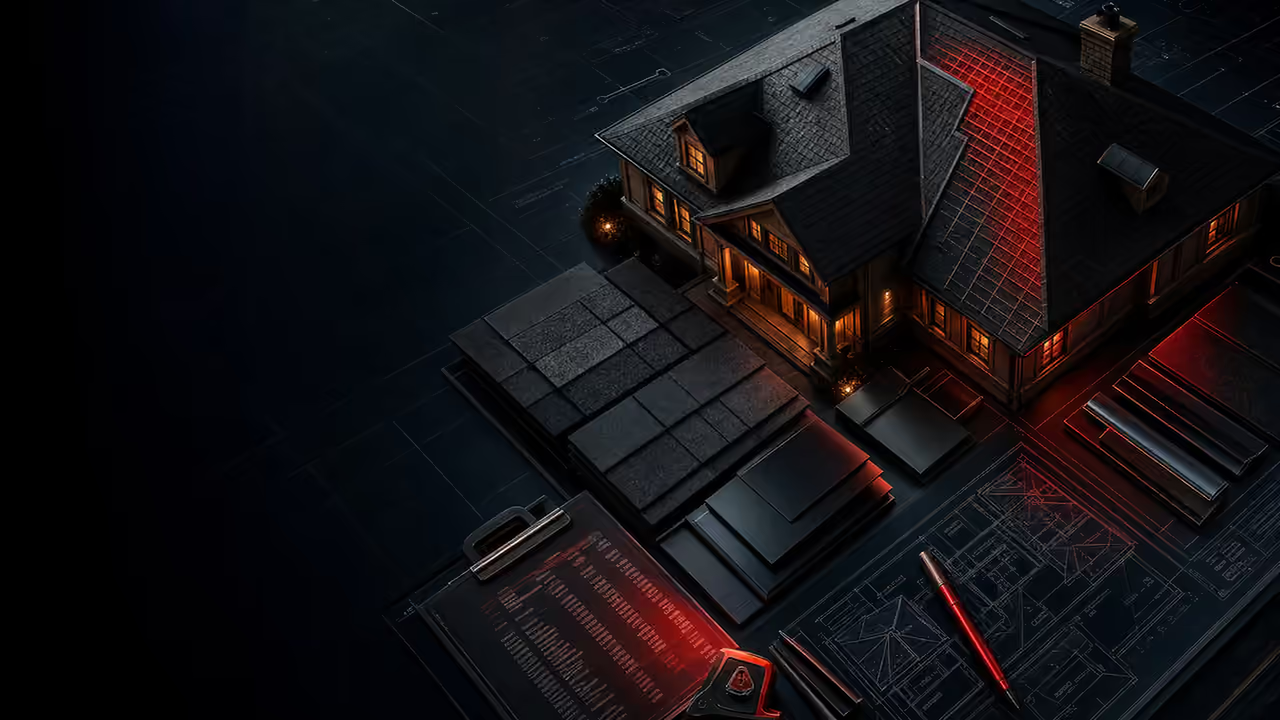
What drives the price of a roof
- Measured area. Roofing is quoted in squares — one square is 100 square feet of roof surface, not floor area. A complex roof has far more surface than the footprint suggests.
- Pitch and access. A steep roof requires staging and slows every stage of the work. Limited driveway or lot access changes how material and debris get moved.
- Layers to remove. Tearing off two or three existing layers costs more in labor and disposal than tearing off one.
- Decking condition. Rotten or delaminated sheathing is only visible after tear-off. A good estimate states a per-sheet price for replacement up front rather than surprising you mid-job.
- Complexity. Valleys, dormers, chimneys, skylights, and wall transitions are where roofs leak, and detailing them properly takes time and material.
- The system you choose. Three-tab, architectural, impact-resistant Class 4, standing-seam metal, concrete or clay tile, natural or synthetic slate — these span an enormous range in both material cost and installation labor.
- Ventilation and code. Bringing intake and exhaust ventilation up to spec, or meeting a current code requirement the old roof predated, is often part of doing the job correctly.