 ROOFING
The four styles most doors fall into
Carriage house
Designed to read like the side-hinged barn doors it replaced, with overlays, cross-bucks, strap hinges, and often a row of upper windows. It still operates as a normal sectional door. It suits traditional, craftsman, farmhouse, Tudor, and Mediterranean elevations, and it is the style that most changes the character of a plain builder-grade front.
Raised panel
The most common residential door: a grid of rectangular raised panels, usually in embossed woodgrain steel. It is the safe, quiet choice — it disappears into most elevations rather than making a statement, which is exactly what you want when the door should not be the focal point.
Contemporary flush
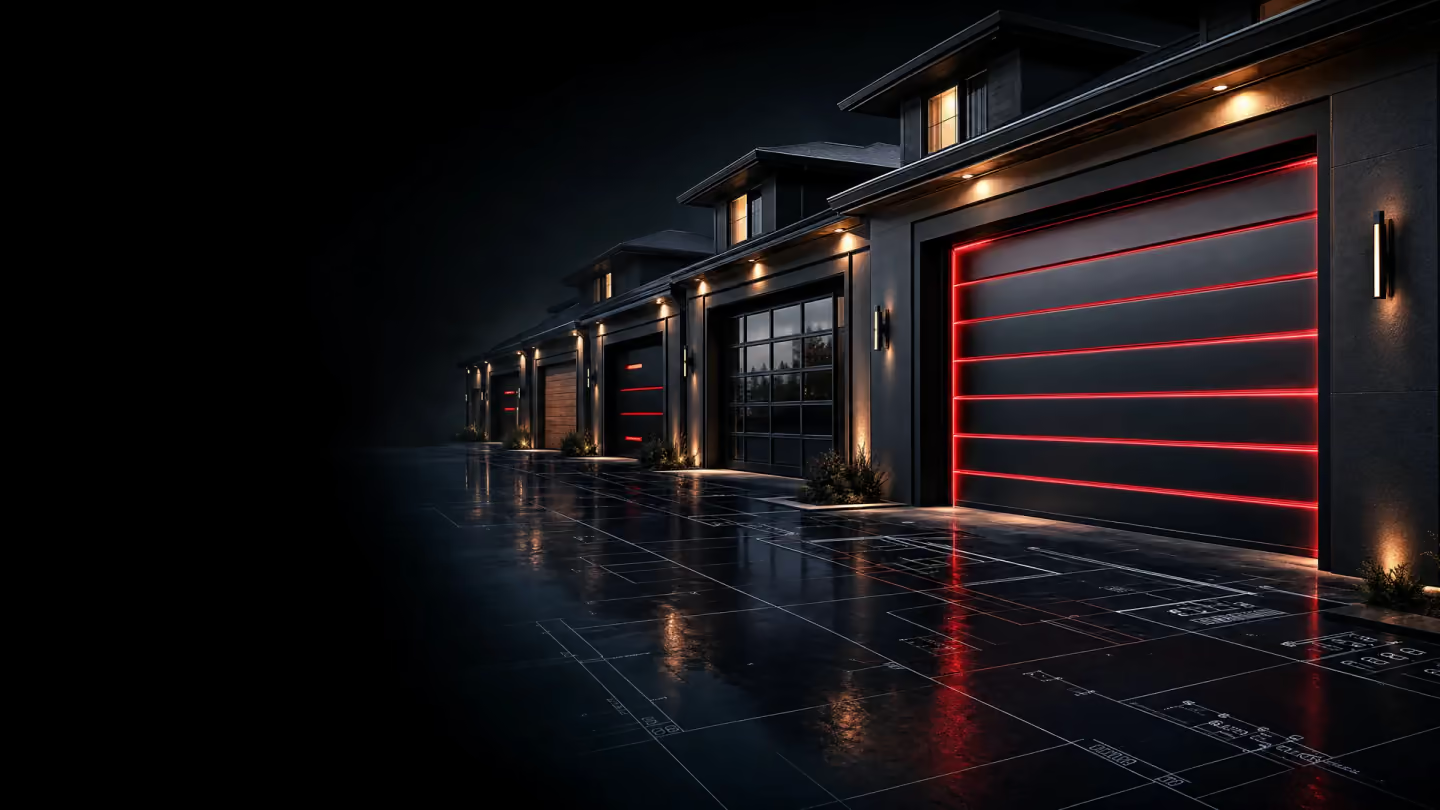
Flat or lightly ribbed sections with no panel detail, frequently in a solid dark color or a smooth woodgrain. It belongs on modern, mid-century, and transitional architecture, and it depends on clean lines — which means the installation has to be square, because there is no panel detail to hide a bad reveal.
Full-view glass
An aluminum frame carrying glass in every section. It is the standard for showrooms, restaurants, breweries, and shops, and it is increasingly used on residential bays that double as living space. Glass can be clear, tinted, obscure, frosted, or insulated. Consider what the door faces and how much heat and sightline you want to accept.