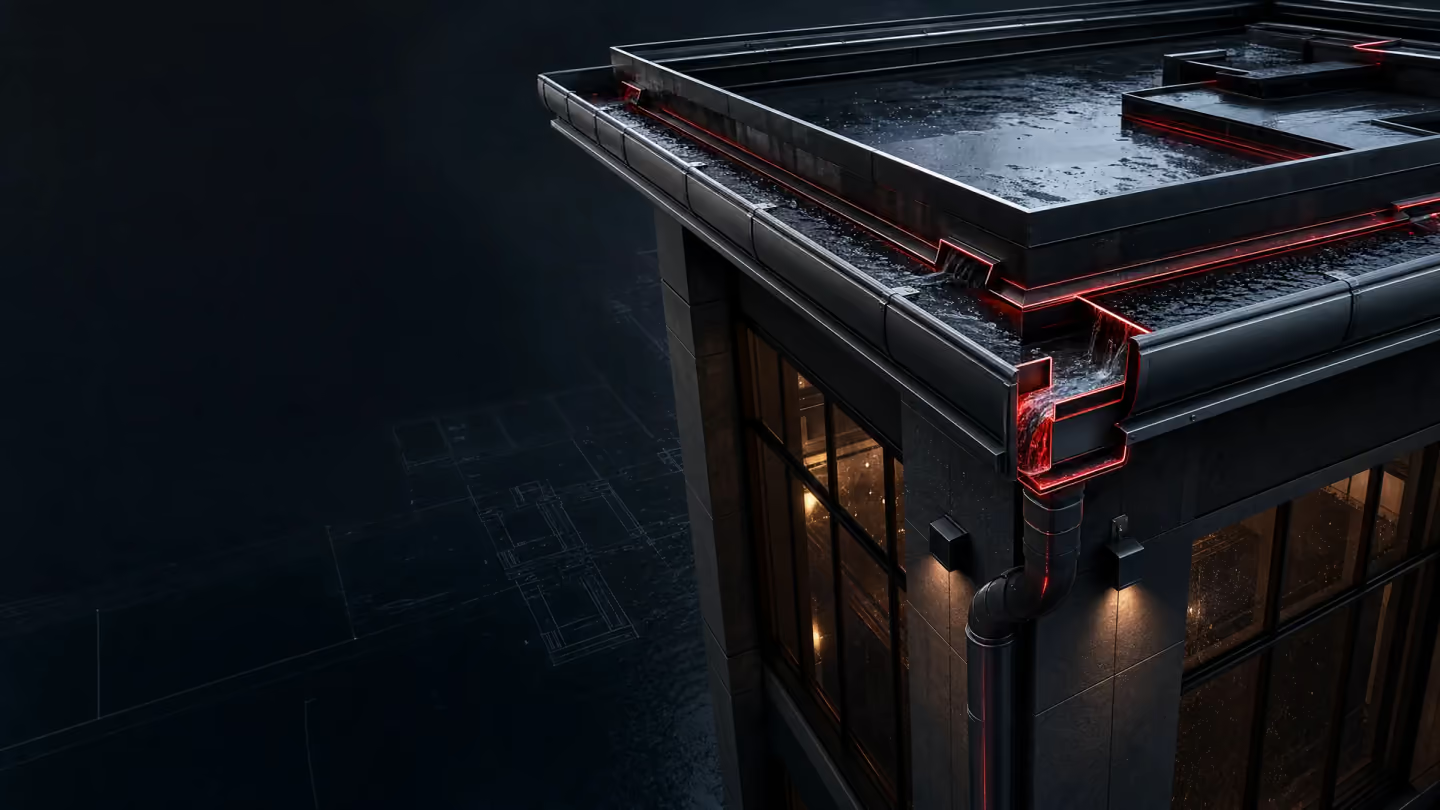
Commercial drainage is sized to two numbers: the tributary roof area feeding each run, and the design rainfall intensity for the location, expressed in inches per hour for a short-duration storm. Multiply them and you get a flow rate, and the trough, outlet, and leader all have to pass it. This is why the same building drawing produces a different gutter schedule in Houston than it would in a low-intensity climate — the Gulf coast design intensity is among the highest in the country, and the plains and the Southeast are not far behind.
The trough is rarely the constraint. Outlets and leaders usually are, and undersizing there is the most common defect on commercial buildings. Oversized downspouts and conductors, and conductor heads at the outlets, exist to solve exactly this. A conductor head is an open collection box between the gutter outlet and the leader; it accepts a surge from the trough, gives it somewhere to go while the leader catches up, and, because it is open, tells you visually when a leader below it has plugged. On tall or long-run buildings, they are a functional component rather than an ornament.
 ROOFING